

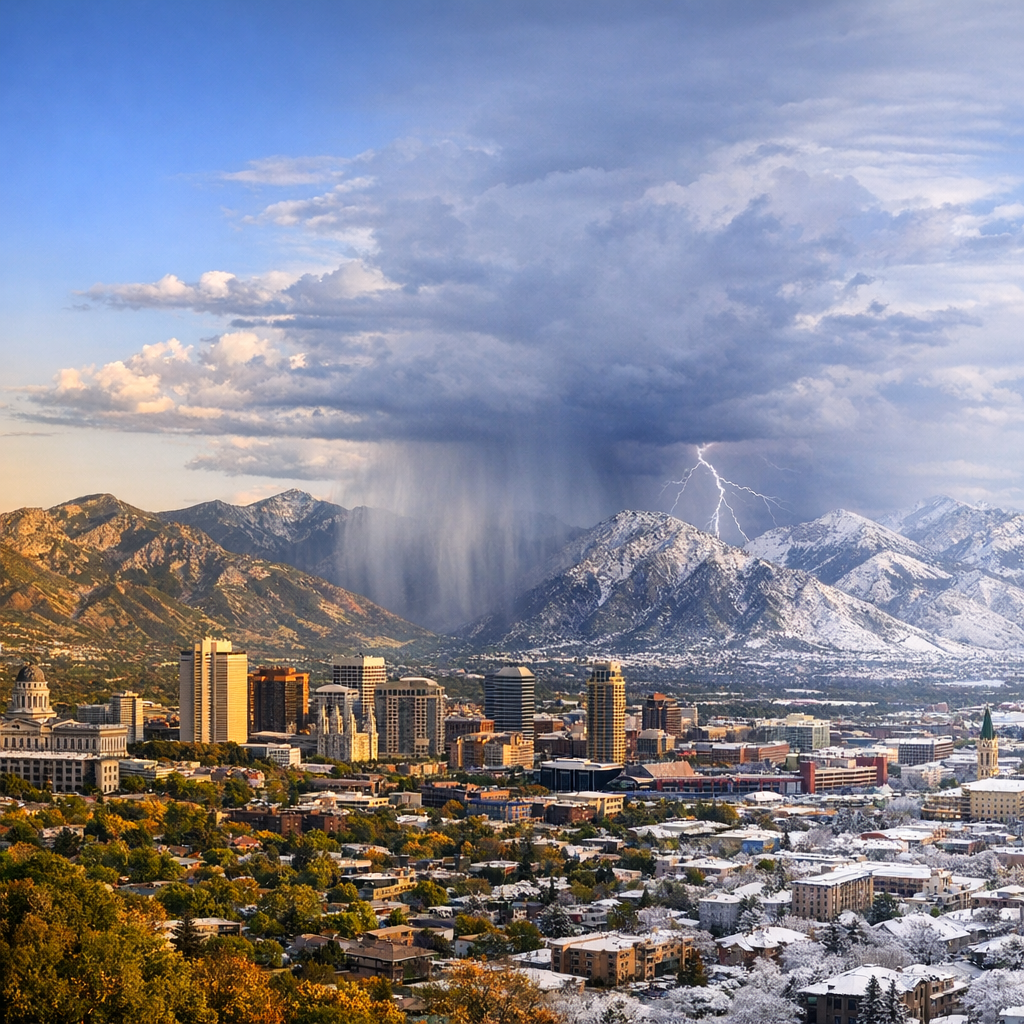
Salt Lake City, nestled in the Salt Lake Valley and flanked by the Wasatch and Oquirrh mountain ranges, boasts a semi-arid climate characterized by four distinct seasons. This unique geography not only shapes the city’s weather patterns but also presents specific environmental challenges.
Seasonal Weather Patterns
Winter (December – February)
Winters are cold and snowy, with average daytime highs around 37°F (3°C) and lows near 23°F (-5°C). Snowfall averages approximately 56 inches annually in the city, while the surrounding mountains receive significantly more. A notable winter phenomenon is the temperature inversion, where cold air becomes trapped beneath a layer of warmer air, leading to persistent fog and degraded air quality. These inversions can last from 7 to 14 consecutive days, affecting visibility and health.
Spring (March – May)
Spring brings milder temperatures and increased precipitation, primarily from Pacific storms. This season also witnesses the spring runoff, where melting snow from the Wasatch Mountains leads to high streamflows in the Jordan River and its tributaries. In years with above-average snowpack, this can result in flooding in low-lying areas.
Summer (June – August)
Summers are hot and dry, with average high temperatures in July around 90°F (32°C). The city has experienced a significant rise in summer temperatures over the past five decades, with average temperatures increasing by nearly 6°F between 1970 and 2024. This warming trend contributes to the urban heat island effect, where urban areas experience higher temperatures than their rural surroundings due to heat absorption by buildings and roads.
Autumn (September – November)
Autumn offers mild temperatures and vibrant foliage, providing a pleasant transition between the extremes of summer and winter. However, the season can also bring variable weather patterns, including occasional early snowfalls.
Environmental Challenges
Air Quality Concerns
Salt Lake City faces significant air quality issues, particularly during winter inversions. The city’s geography and weather patterns can trap pollutants close to the surface, leading to decreased air quality and the formation of visible smog layers. The Salt Lake City-Provo-Orem metro area ranks as the 13th worst in the U.S. for ozone pollution, moving up four spots from the previous year. Exposure to ozone can lead to serious health conditions, including respiratory and heart diseases.
Flood Risks
Nearly 5% of homes in the Salt Lake City metro area—valued at approximately $9 billion—face severe or extreme flood risk. This threat is part of a broader national issue, with about 6.1% of homes across the U.S. at similar risk. Climate change is a driving force behind increasingly extreme weather, leading to higher home insurance premiums and, in some cases, insurers withdrawing coverage from high-risk areas.
Urban Heat Islands
The urban heat island effect exacerbates heat in Salt Lake City, with 64% of residents living in areas where summer temperatures are amplified by at least 8°F due to heat absorption by constructed surfaces like roads and buildings. Unlike the national trend where lower-income neighborhoods typically suffer more, Salt Lake City’s heat islands are scattered, affecting even areas like Sugar House Park. The city has been actively working to mitigate this effect by planting shade trees and adding green spaces.
Understanding Salt Lake City’s unique climate and the environmental challenges it faces is crucial for residents and policymakers alike. By recognizing these patterns and issues, the community can work towards sustainable solutions to ensure a healthier and more resilient environment for all.