

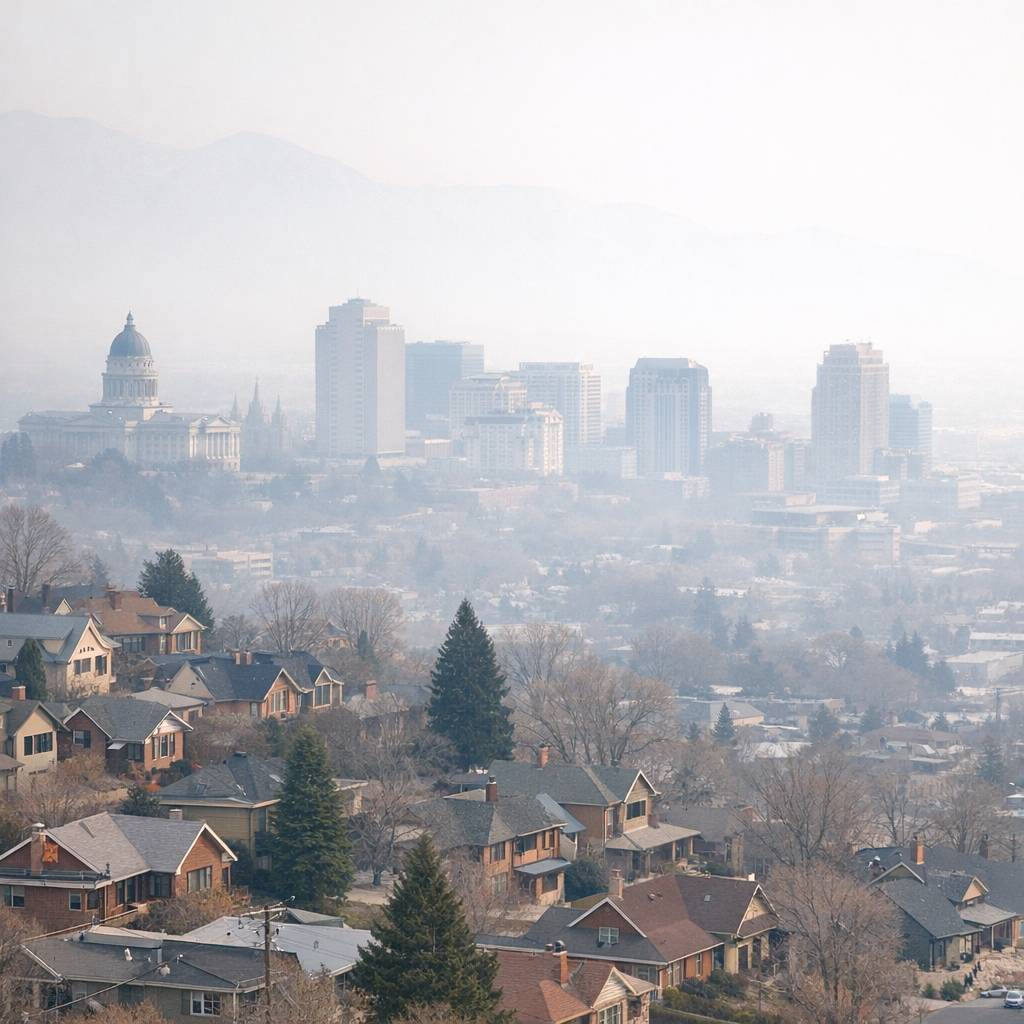
Salt Lake City continues to confront significant challenges in housing affordability and air quality, issues that deeply impact residents’ daily lives and the city’s future development.
Housing Affordability Crisis
Housing affordability remains a pressing concern for many Salt Lake City residents. A recent analysis indicates that over 80% of homes in the city are unaffordable for the typical household, surpassing the national average of 75%. This crisis is driven by high home prices, elevated mortgage rates, and a significant shortage of available homes. In response, state lawmakers are proposing policies such as easing local zoning laws and providing public funding or tax incentives to cities for moderate-income housing development.
Air Quality Concerns
Air quality along the Wasatch Front continues to be a significant concern. A recent study by the American Lung Association reveals that the Salt Lake City-Provo-Orem metro area ranks as the 13th worst in the U.S. for ozone pollution, moving up four spots from the previous year. Ozone pollution poses serious health risks, including respiratory and heart diseases, and reduced life expectancy. The report underscores the need for continued efforts to improve air quality in the region.
Community Initiatives and Policy Responses
In response to these challenges, Salt Lake City is undertaking several initiatives. The city has launched the ‘Thriving in Place’ strategy, an anti-displacement plan developed through extensive community engagement and data analysis. This strategy aims to address gentrification pressures and support residents vulnerable to displacement due to increasing rents. Additionally, the city is conducting the ‘West-East Connections’ study to identify solutions for long-standing transportation barriers between the city’s west and east sides, aiming to improve connectivity and address infrastructure disparities.
These efforts reflect Salt Lake City’s commitment to addressing critical community issues through collaborative and data-driven approaches, aiming to create a more equitable and sustainable urban environment for all residents.