

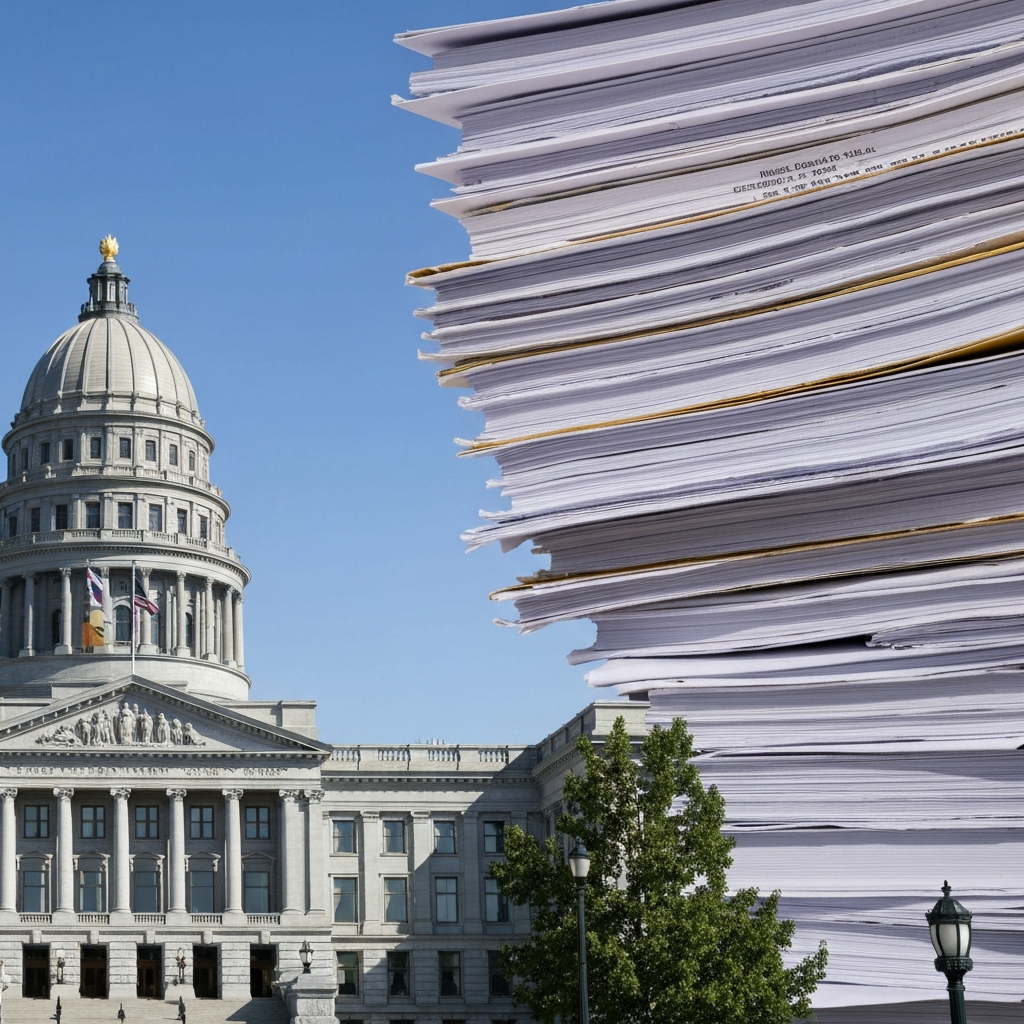
Federal policies play a significant role in shaping the economic and political environment of individual states, including Utah. Understanding these influences is crucial for residents and policymakers alike.
Economic Impacts of Federal Regulations
Federal regulations have a profound effect on Utah’s economy. Studies indicate that from 1997 to 2015, the increase in federal regulatory burden was associated with:
- An increase of approximately 39,112 individuals living in poverty.
- A 3.2% rise in income inequality.
- The loss of about 103 small businesses annually.
- An annual reduction of 1,221 jobs.
- A 7.35% increase in consumer prices.
These statistics highlight the unintended consequences that federal regulations can have on state economies, particularly affecting small businesses and low-income populations. Source
Federal Funding in Utah’s State Budget
Federal funds constitute a significant portion of Utah’s state budget. In Fiscal Year 2024, federal funds accounted for 27% of the state’s spending, totaling just over $7 billion of the $26 billion budget. These funds primarily support social services, housing, and community development programs, with Medicaid alone representing 50% of the state-federal spending. Source
Political Landscape and Federal Influence
Utah has traditionally been a Republican stronghold. As of October 21, 2024, party registration statistics were as follows:
- Republican: 50.17%
- Unaffiliated: 28.98%
- Democratic: 14.17%
- Other: 6.68%
Despite this, federal policies and national political trends can influence state politics. For instance, redistricting battles and federal legislative changes can impact local political dynamics and representation. Source
Conclusion
Federal policies and regulations have a multifaceted impact on Utah’s economy and political landscape. While they provide essential funding and support for various programs, they can also introduce challenges that require careful navigation by state leaders and residents.