

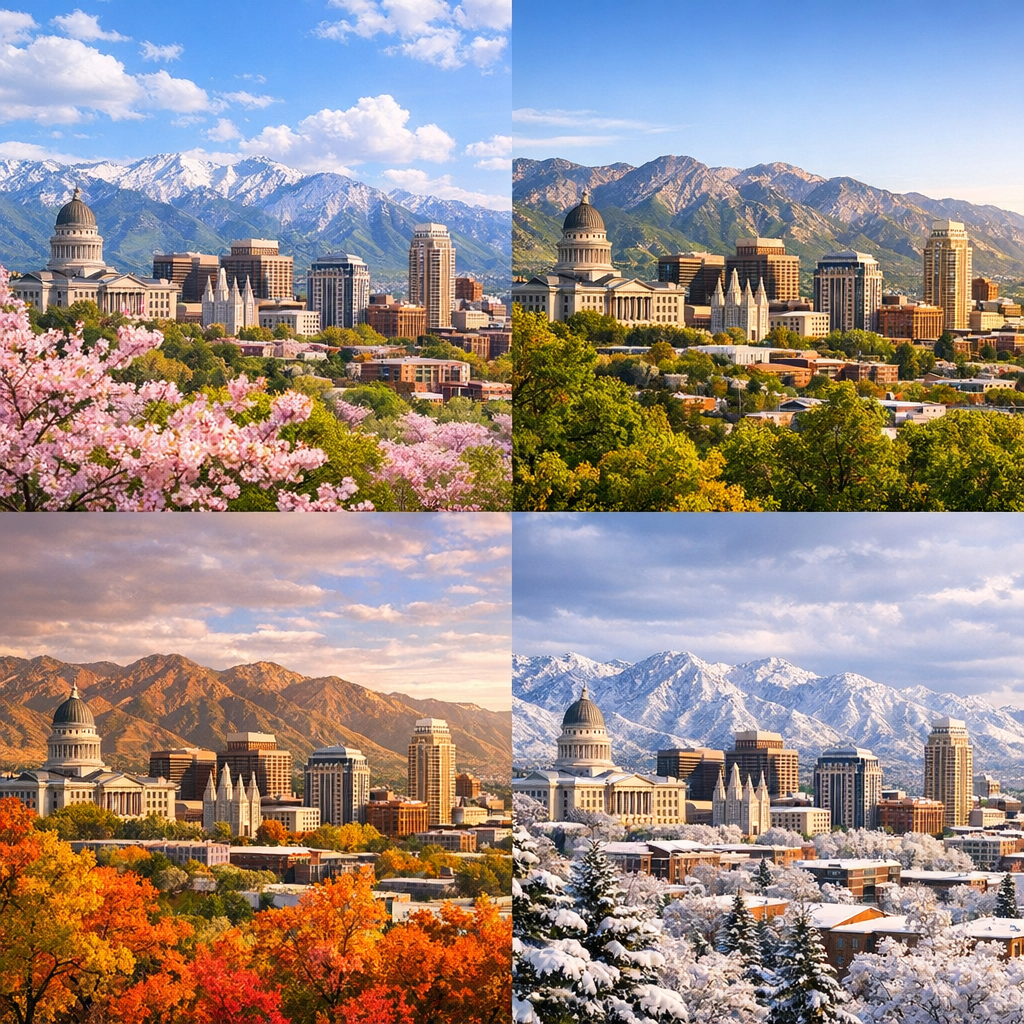
Salt Lake City, nestled in the Salt Lake Valley and surrounded by the Wasatch Mountains and the Great Salt Lake, experiences a diverse climate characterized by four distinct seasons. This unique geography influences the city’s weather patterns, offering residents and visitors a variety of conditions throughout the year.
Winter: Cold and Snowy
From December through February, Salt Lake City experiences cold temperatures and frequent snowfall. Average daytime highs hover around 37°F (3°C), with lows near 23°F (-5°C). The city receives an average of 56 inches of snow annually, making it a haven for winter sports enthusiasts. However, temperature inversions during this season can lead to persistent fog and haze, affecting air quality in the valley.
Spring: Wet and Mild
Spring, particularly March, is the wettest season in Salt Lake City, with numerous rain showers and high winds from Pacific storms. Temperatures gradually warm, providing a pleasant transition from the cold winter months.
Summer: Hot and Dry
Summers, from June to August, are hot and dry, with average high temperatures reaching 92°F (33°C). The low humidity levels make the heat more tolerable. However, occasional monsoonal moisture from the Gulf of California can bring afternoon thunderstorms, adding variability to the summer weather.
Autumn: Cool and Variable
Autumn is marked by variable temperatures and occasional rain. The season offers a comfortable climate, with cooler temperatures and the changing colors of the foliage providing a picturesque setting.
Understanding these seasonal patterns is essential for residents and visitors to plan activities and be prepared for the varying weather conditions that Salt Lake City offers throughout the year.